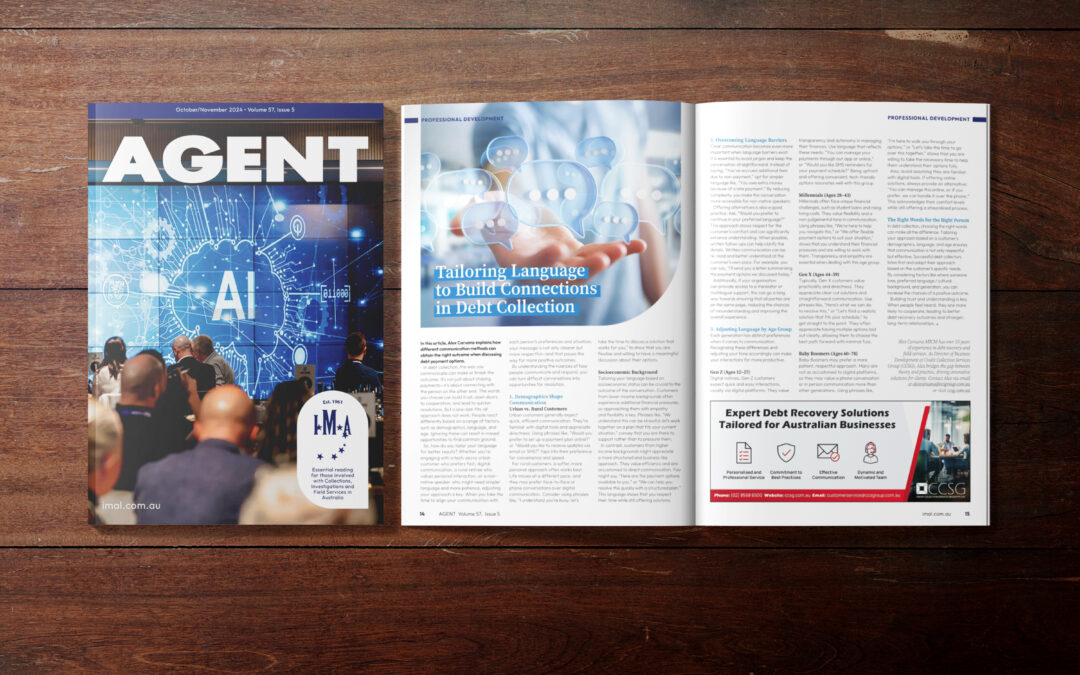
In debt collection, the way you communicate can make or break the outcome. It’s not just about chasing payments—it’s about connecting with the person on the other end. The words you choose can build trust, open doors to cooperation, and lead to quicker resolutions. But a one-size-fits-all approach doesn’t work. People react differently based on a range of factors, such as demographics, language, and age. Ignoring these can result in missed opportunities to find common ground.
So, how do you tailor your language for better results? Whether you’re engaging with a tech-savvy urban customer who prefers fast, digital communication, a rural retiree who values personal interaction, or a non-native speaker who might need simpler language and more patience, adjusting your approach is key. When you take the time to align your communication with each person’s preferences and situation, your message is not only clearer but more respectful—and that paves the way for more positive outcomes.
By understanding the nuances of how people communicate and respond, you can turn difficult conversations into opportunities for resolution.

1. Demographics Shape Communication
- Urban vs. Rural Customers
Urban customers generally expect quick, efficient communication. They’re familiar with digital tools and appreciate directness. Using phrases like, “Would you prefer to set up a payment plan online?” or “Would you like to receive updates via email or SMS?” taps into their preference for convenience and speed.
For rural customers, a softer, more personal approach often works best. Life moves at a different pace, and they may prefer face-to-face or phone conversations over digital communication. Consider using phrases like, “I understand you’re busy; let’s take the time to discuss a solution that works for you,” to show that you’re flexible and willing to have a meaningful discussion about their options.
- Socioeconomic Background
Tailoring your language based on socioeconomic status can be crucial to the outcome of the conversation. Customers from lower-income backgrounds often experience additional financial pressures, so approaching them with empathy and flexibility is key. Phrases like, “We understand this can be stressful; let’s work together on a plan that fits your current situation,” convey that you’re there to support rather than to pressure them.
In contrast, customers from higher-income backgrounds might appreciate a more structured and business-like approach. They value efficiency and are often accustomed to direct communication. You might say, “Here are the payment options available to you,” or “We can help you resolve this quickly with a structured plan.” This language shows that you respect their time while still offering solutions.

2. Overcoming Language Barriers
Clear communication becomes even more important when language barriers exist. It’s essential to avoid jargon and keep the conversation straightforward. Instead of saying, “You’ve accrued additional fees due to non-payment,” opt for simpler language like, “You owe extra money because of a late payment.” By reducing complexity, you make the conversation more accessible for non-native speakers.
Offering alternatives is also a good practice. Ask, “Would you prefer to continue in your preferred language?” This approach shows respect for the customer’s comfort and can significantly enhance understanding. When possible, written follow-ups can help clarify the details. Written communication can be re-read and better understood at the customer’s own pace. For example, you can say, “I’ll send you a letter summarising the payment options we discussed today.”
Additionally, if your organisation can provide access to a translator or multilingual support, this can go a long way toward ensuring that all parties are on the same page, reducing the chances of misunderstanding and improving the overall experience.

3. Adjusting Language by Age Group
Each generation has distinct preferences when it comes to communication. Recognising these differences and adjusting your tone accordingly can make your interactions far more productive.
- Gen Z (Ages 12–27)
Digital natives, Gen Z customers expect quick and easy interactions, usually via digital platforms. They value transparency and autonomy in managing their finances. Use language that reflects these needs: “You can manage your payments through our app or online,” or “Would you like SMS reminders for your payment schedule?” Being upfront and offering convenient, tech-friendly options resonates well with this group.
- Millennials (Ages 28–43)
Millennials often face unique financial challenges, such as student loans and rising living costs. They value flexibility and a non-judgemental tone in communication. Using phrases like, “We’re here to help you navigate this,” or “We offer flexible payment options to suit your situation,” shows that you understand their financial pressures and are willing to work with them. Transparency and empathy are essential when dealing with this age group.
- Gen X (Ages 44–59)
Typically, Gen X customers value practicality and directness. They appreciate clear-cut solutions and straightforward communication. Use phrases like, “Here’s what we can do to resolve this,” or “Let’s find a realistic solution that fits your schedule,” to get straight to the point. They often appreciate having multiple options laid out clearly, allowing them to choose the best path forward with minimal fuss.
- Baby Boomers (Ages 60–78)
Baby Boomers may prefer a more patient, respectful approach. Many are not as accustomed to digital platforms, so they may value a phone conversation or in-person communication more than other generations. Using phrases like, “I’m here to walk you through your options,” or “Let’s take the time to go over this together,” shows that you’re willing to take the necessary time to help them understand their options fully.
Also, avoid assuming they’re familiar with digital tools. If offering online solutions, always provide an alternative: “You can manage this online, or if you prefer, we can handle it over the phone.” This acknowledges their comfort levels while still offering a streamlined process.
The Right Words for the Right Person
In debt collection, choosing the right words can make all the difference. Tailoring your approach based on a customer’s demographics, language, and age ensures that communication is not only respectful but effective. Successful debt collectors listen first and adapt their approach based on the customer’s specific needs. By considering factors like where someone lives, preferred language / cultural background, and generation, you can increase the chances of a positive outcome.
Building trust and understanding is key. When people feel heard, they are more likely to cooperate, leading to better debt recovery outcomes and stronger, long-term relationships.
—
Alex Caruana MICM has over 35 years of experience in debt recovery and field services. As Director of Business Development at Credit Collection Services Group (CCSG), Alex bridges the gap between theory and practice, driving innovative solutions for clients. Contact Alex via email at alexcaruana@ccsgroup.com.au or visit www.ccsg.com.au