
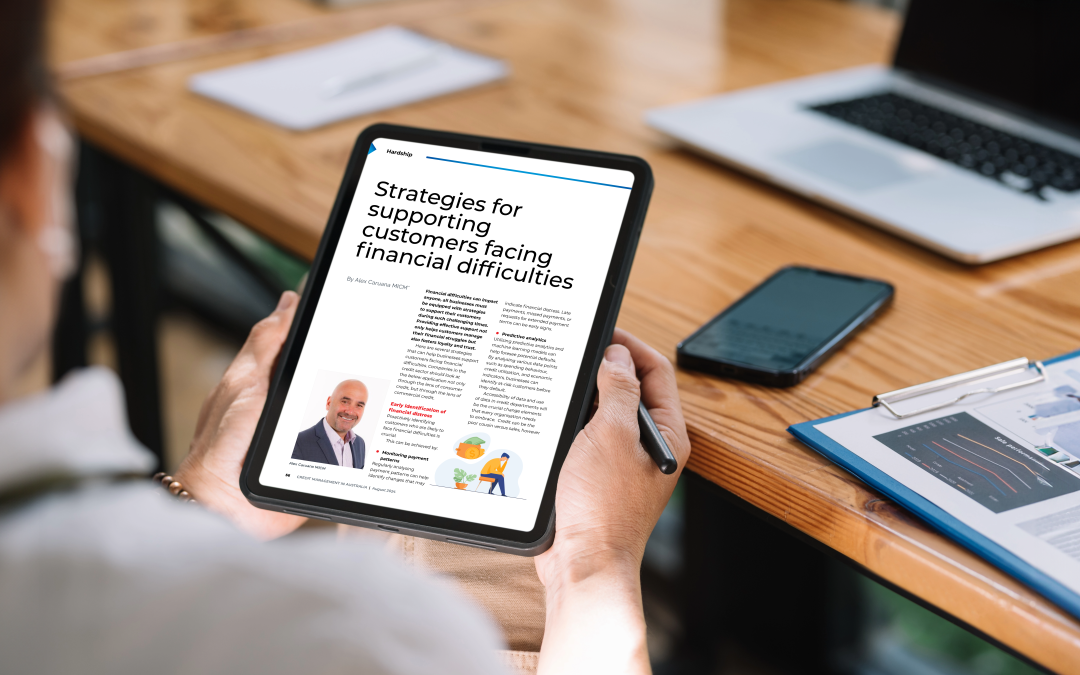
By Alex Caruana MICM*
Financial difficulties can impact anyone, all businesses must be equipped with strategies to support their customers during such challenging times. Providing effective support not only helps customers manage their financial struggles but also fosters loyalty and trust.
Here are several strategies that can help businesses support customers facing financial difficulties. Companies in the credit sector should look at the below application not only through the lens of consumer credit, but through the lens of commercial credit.

Early identification of financial distress
Proactively identifying customers who are likely to face financial difficulties is crucial. This can be achieved by:
Monitoring payment patterns
Regularly analysing payment patterns can help identify changes that may indicate financial distress. Late payments, missed payments, or requests for extended payment terms can be early signs.
Predictive analytics
Utilising predictive analytics and machine learning models can help foresee potential defaults. By analysing various data points such as spending behaviour, credit utilisation, and economic indicators, businesses can identify at-risk customers before they default.
Accessibility of data and use of data in credit departments will be the crucial change elements that every organisation needs to embrace. Credit can be the poor cousin versus sales, however by asking for data and using your data effectively will assist in identifying customers in financial distress.
Personalised communication and engagement
Effective communication is key to supporting customers. Personalised communication can make customers feel valued and understood. Strategies include:
Personalised outreach
Reach out to customers personally to discuss their financial situation and offer assistance. This can include phone calls, personalised emails, or in-person meetings including field calls where less intrusive means have failed to make contact.
Clear and transparent information
Provide clear and transparent information about their account status, payment options, and available support. This helps in building trust and reducing anxiety about their financial situation.
“Financial difficulties can impact anyone, all businesses must be equipped with strategies to support their customers during such challenging times.”
Flexible repayment plans
Offering flexible repayment plans can provide significant relief to customers in financial distress. This can include:
Custom repayment plans
Develop tailored repayment plans based on the customer’s current financial situation. This might involve smaller, more manageable payments over an extended period.
Interest rate adjustments
Temporarily reducing or waiving interest rates can make repayments more manageable and demonstrate empathy and understanding support. It may prove beneficial to put a customer on a payment plan that to take further action. Having a process that allows the customer to feel engaged
will deliver a greater outcome for you and the customer and will generally lead to a higher repayment amount or sustained repayment plan.
Leveraging technology
Technology can enhance the support provided to customers facing financial difficulties. Innovations include:
Digital portals
Create secure digital portals where customers can view their account status, access resources, communicate with your staff and raise queries with any invoices.
Automated reminders
Implement personalised automated reminders for upcoming payments or overdue balances, helping customers stay on track without feeling overwhelmed.
Credit reporting
Ensure that you have direct access to credit reporting agencies and subscriptions to enable you to make the right credit decisioning before credit is extended. We are sitting in a technology boom in the way in which credit is supported. There is multiple applications on the market that can support your credit functions. Investing in technology not only improves your team efficiency, however it will improve your customer engagement and set you apart from your competitors.
Empathy and compassion
Demonstrating empathy and compassion can make a significant difference. Key approaches include:
Training staff
Train staff to handle sensitive conversations with empathy and understanding. Ensure they are equipped to offer support and solutions rather than just enforcing payment terms.
Creating a supportive environment
Foster a company culture that prioritises customer well-being and encourages employees to go the extra mile in providing support. This is one thing that does not cost you anything, however could be the difference between you getting paid or not.
Collaboration with financial advisors
Collaborating with external financial advisors can provide customers with additional support and expertise. This collaboration can involve:
Partnerships
Establish partnerships with financial counselling firms to offer customers professional financial advice.
Referral programs
Implement referral programs where customers can be referred to trusted financial counselling services for more in-depth support.

Transparent policies and procedures
Ensuring that your credit terms and applications are transparent and easily understood can help alleviate customer stress. This involves:
Clear policy communication
Clearly communicate policies related to late payments, defaults, and available support options.
Simplified Processes
Simplify processes for requesting assistance, making it easier for customers to seek help when needed.
Disputed Invoices
Set up a process that allows your customers to dispute any invoices which they have with you. This should include a process where undisputed debts are quarantined and paid by the customer.
Summary
Supporting customers facing financial difficulties is not just about managing risk but about building long-term, trust-based relationships. By proactively identifying distress signals, engaging customers with empathy, offering flexible repayment options, and providing financial education,
businesses can significantly enhance customer satisfaction
and loyalty.
These strategies not only help customers navigate financial challenges but also contribute to the overall success and reputation of the business.
Adopting a customer-centric approach to financial difficulties can transform challenges into opportunities for stronger, more resilient customer relationships.
As we navigate the complexities of the financial world, these strategies will remain key to achieving sustainable success in credit management.

*Alex Caruana MICM is an accomplished professional in debt recovery and field services with over 35 years of industry experience. As Director – Business Development at Credit Collection Services Group (CCSG), Alex is at the forefront of industry engagement, bridging the gap between theory and practice. Drawing from his extensive experience across all sectors, Alex leads initiatives that enhance partner relationships and drives innovative solutions for clients and their customers. Contact Alex Caruana via email alexcaruana@ccsgroup.com.au